

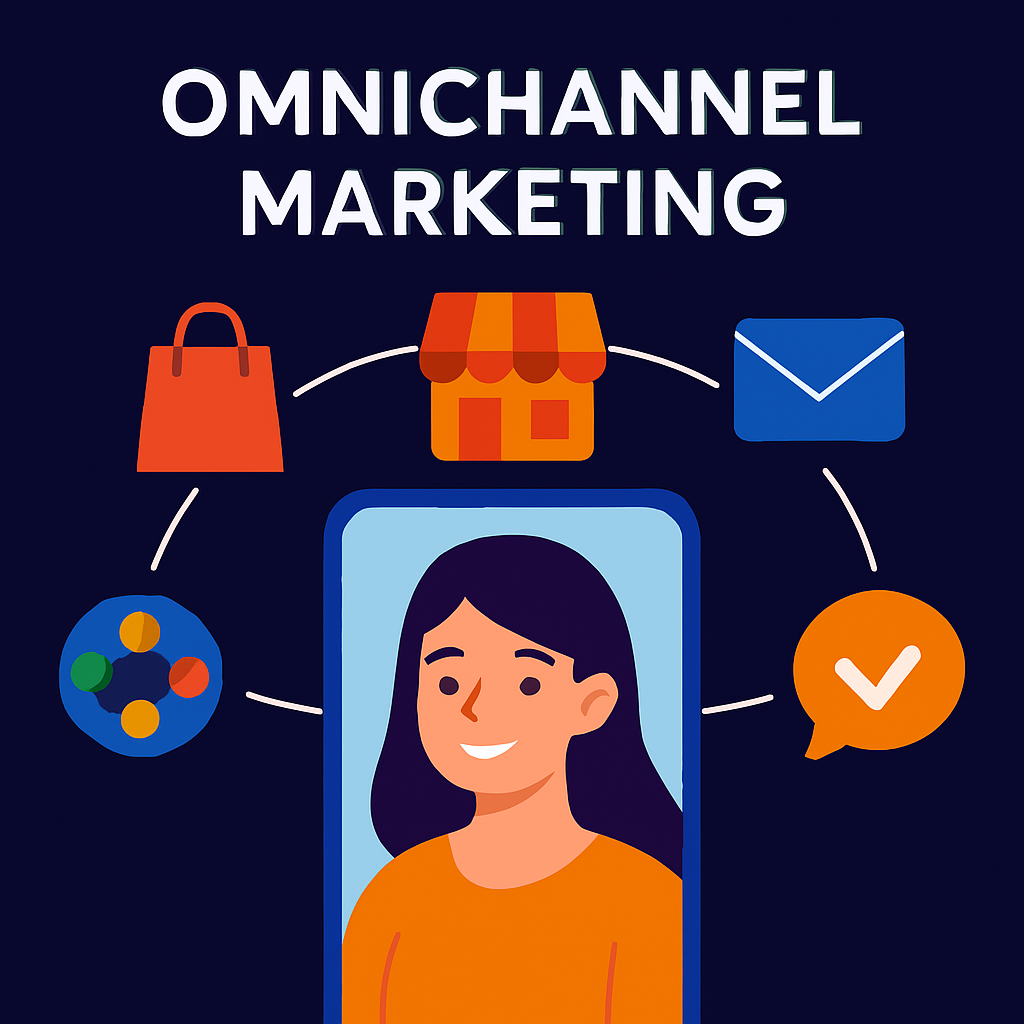
Omnichannel marketing creates a consistent and recognizable brand experience across every channel from social media to email and your website. This builds trust, attracts more customers, and increases your return on investment. In this blog, you’ll learn what it means, why it matters, and how to get started today.
Omnichannel marketing may sound complex, but it’s actually simple: make sure your message and style are the same everywhere.
Whether someone sees your business on Instagram, visits your website, or opens one of your emails, it should all feel like it comes from the same place. That’s how people start to recognize your brand, trust you more, and are more likely to become paying customers.
What is it exactly?
Omnichannel marketing means creating one clear experience across every place where your customer interacts with your brand. That includes your social media channels (like Facebook, LinkedIn, or TikTok), your website or online store, your email newsletters, and even your physical shop or showroom. All these touchpoints should fit together smoothly, like pieces of the same puzzle.
Why does it matter?
Your brand becomes more memorable
When people see your business in the same way across different channels, they start to recognize and remember it. This makes you their first choice when it’s time to buy.
More people take action
A consistent brand experience helps customers make decisions faster. This leads to more clicks, more purchases, and more quote requests.
You get better results from your ad budget
By seeing which channels perform best, you can invest smarter. Your marketing becomes more efficient and gets you more return on every euro you spend.
A simple example
Let’s say someone sees your Instagram post. Later that day, they visit your website. The next morning, they get a friendly email from you. The same logo, the same tone, the same message… Everything feels familiar. That builds trust. And trust turns into action.
How to get started with omnichannel marketing
Use the same logo, colors, and tone everywhere. Make sure your message is clear and consistent. Use customer data (like location or past behavior) to make your messages more personal. Connect your channels; for example, follow up social ads with matching emails.
Conclusion
Omnichannel marketing helps your business grow by creating a clear and trusted experience for your audience. By showing up in the same way across all platforms, you turn people who are just looking into people who take action both online and offline.